Seasonal affective disorder or SAD, is a type of depression related to changes in the seasons. SAD can appear during late fall or early winter and go away during the sunnier days of spring and summer. Less commonly, people can have the opposite symptomatology, which begin in spring or summer.
Symptoms may start out mild and become more severe as the season progresses. Factors which may come into play include a disruption in an individual’s biological clock, a decrease in serotonin levels, and a change in melatonin levels (which plays a role in sleep patterns/mood). Listed below are symptoms and coping skills for SAD.
Symptoms to look for can include:
Feeling depressed or low energy most of the day, nearly every day
Losing interest in activities you once enjoyed
Sleep problems
Changes in appetite or weight
Feeling agitated
Difficulty concentrating
Feeling hopeless, worthless, or guilty
Thoughts of death or suicide
Coping skills to try:
Opening curtains in the morning to let in sunshine
Maintaining a daily routine
Exercise
Light Therapy – the bright light emitted from the device can help the body feel more awake
Healthy diet
Getting outside
Meditating, practicing relaxation
Traveling
If you notice a significant difference in your sleep, appetite, or mood during this time of the year, it may be time to contact your doctor/therapist.
Boundaries. You may hear that word a lot, either from your therapist, pop culture references, or
trending social media conversations on mental health.
But what are boundaries, really? Let’s start with what boundaries are not. Boundaries are not rules for how other people should talk or behave. They aren’t a way for us to control what’s going on around us. In fact, boundaries aren’t about others at all.
Boundaries are standards we set for our own actions, speech, and thoughts. They’re rules we set for ourselves, that help us understand how to act – and react – in any given situation. They help us decide what tasks to spend our time, energy, money, and attention on.
Some examples of boundaries might include:
ending a conversation when someone speaks rudely to you
not checking your work email after hours
not keeping junk food in the house
choosing to read a book rather than watch tv
sticking to a budget instead of impulse buying
limiting your social media use
declining an invitation when you don’t want to go
telling a friend or family member how you feel, why you feel that way, and what they can do to help
The way you hold boundaries in your life is a direct indicator of the respect you have for yourself. It is never mean or wrong to set boundaries for yourself, as long as you’re doing it for yourself. Remember, boundaries are not about others – they’re standards we set for ourselves in order to protect ourselves from what’s unhelpful or unhealthy and to help us reach our personal goals.
Attachment is the way in which children come to trust, understand and thrive in their world. The parent-child attachment is one of the most important attachments in a child’s life. One approach to help improve the parent-child relationship is called Theraplay. Theraplay was developed to support healthy child/caregiver attachment/relationship. Theraplay is good to utilize when the relationship seems stunted, distant, or non-existent. Theraplay also benefits children who struggle with following directions, impulse control, concentration, and playing with others. Theraplay is broken down into 4 core concepts. The 4 core concepts include challenge, structure, engagement and nurture.
Challenging activities lead to a sense of competence and mastery. These activities help the client master new things and move forward while still providing the support that assures them of success. Challenging activities help the child learn they can branch out while always being able to count on the adult for support. Common challenging Theraplay activities include balloon volley, bubble tennis, cotton ball race, newspaper punch, straight face, and toilet paper wrap.
Structure activities are providing a sense of organization, safety and regulation skills. The child needs a role model who they can count on to set limits and provide modeling for appropriate behaviors. Using start and stop signals can be helpful during structure activities. Common structure Theraplay activities include mirroring, special handshakes, beanbag fall, play dough prints, cotton ball hockey, peanut butter and jelly, and stack hands.
Engagement activities help with connection, optimal arousal and shared joy. With playful interactions, the child gets experience, new body engagement, and how to interact with others in a shared environment. Parents have to help co-regulate with the child during these activities. Parents need to match their moods/excitement. Common engagement Theraplay activities include measuring, tin foil prints, sticky nose, pop cheeks, popcorn toes, blow me over, and hide/find.
Nurture activities help with enhancing self-worth, regulating and staying calm, and empathetic responses for comfort and reassurance. Nurture activities provide children the secure base to return to when feeling stressed or needing comfort. Touch is an important concept during nurturing activities. Common nurturing Theraplay activities include caring for hurts, guessing games, preparing pizza (back massage), and feeding snacks. Common Theraplay supply list includes ribbon/yard, party balloons, tinfoil, pillow, blanket, beanbag, playdough, bubbles, cotton balls, feathers, newspaper, lotion and snack food.
With the month of September comes Suicide Prevention and Awareness month. And if you, like me, are one of the many touched by suicide, I am so sorry for your loss. It’s a heavy hurt to hold and tends to bring more questions than answers.
It can be easy to get caught up in the how or why they died. The questions can become unrelenting. But would you take a moment with me today to remember and share stories of how they lived? The everyday things they found joy in, the silly quirks they had, their smile, their laugh, the things they did that annoyed the snot out of you…
Remembering how they lived and sharing those stories is not only a way to honor and celebrate our loved ones, but a way to continue breaking the stigma of mental health as a whole, and suicide in particular. If we want to see the statistics change, we have to be able to talk about it.
With all of that said, do you mind if I share some stories of the ones I love and miss?
Val and I spent every afternoon together from the time I was in preschool until third grade. We rode bikes around town, made silly bumper stickers, took road trips to neighboring towns while singing along to Patsy Cline tapes, attended events at the senior center, helped out at the VFW and so much more. He loved to prank people in his full-body gorilla suit; you never knew when you’d see a gorilla lurking around the local park or even your own backyard. Every Sunday he came over for dinner and to watch reruns of HeeHaw. He found joy and purpose in serving the community: every Monday he helped unload the truck at our small town grocery, he quietly mowed lawns for community members, for 60+ years he both served on the volunteer fire department and was the town Santa.
I graduated high school with Mandie and Diamond, and with a class of only 22 people, we shared a lot of life. I’m filled with memories of dreading track practice, volleyball team dinners, marching band, a rambunctious food fight on our last day, musical productions, proms, sledding at “Watermelon Hill,” running around town and so much more. If you and I were getting coffee together I’d tell you about every shenanigan pulled.
Mandie was goofy and fun, had an overwhelming love for animals, cared deeply for people, was absolutely obsessed with the vanilla bean scent and had probably 5000 body sprays. To this day, she is one of the kindest people I know. Diamond was strong, outgoing and confident with a love for adventure. Nothing held her back, she always stood up for what she believed in and didn’t back down easily. She was the life of every party and made friends everywhere she went.
These stories are just a glimpse into the lives that my friends lived, the lives I wish they were still living. It’s important to talk about how they died and fight for change, but we can’t forget how they lived.
While traditional talk therapy has often been seen as a primary approach to trauma treatment, research now shows that yoga can significantly reduce symptoms of PTSD. When someone is reminded of past trauma and becomes dysregulated, CBT interventions can be ineffective in the moment, due to the inability to think rationally and feel safe in their bodies. We are unable to create effective change when we are dysregulated.
Using a mind and body approach, such as yoga, can help individuals learn to self-regulate, and be more aware of their feelings and physical sensations. More specifically, trauma-informed yoga can help people begin to feel calm, safe and comfortable in their own bodies. This happens through offering and exploring choices of poses and positions of the body, to help one identify and better understand what they need throughout their healing process.
Some benefits of trauma-informed yoga include: increased ability to be aware of and identify body’s needs, sense of control and ownership over physical body, improved ability to identify and utilize appropriate coping strategies when reminded of trauma, ability to manage trauma-related physical sensations, acceptance of body and self with less judgement and criticism, reduction in PTSD symptoms, ability to recognize the importance of self-care, and ability to utilize appropriate self-soothing skills when experiencing a flashback or trauma reminder.
I believe that it is a common misconception, that for the sole reason of it being Summer, we are supposed to be rays of happiness and be ‘living our best life’. For some, this is the case and Summer brings about images of sunshine and carefree memories. However, for others, this is not their reality and feelings of depression, stress and anxiety don’t disappear just because the calendar hits June. Because of this, I’ve put together a ‘Summer Mental Health Bucket List’ to inspire you to stimulate your mind and body the remainder of this Summer and help you build new habits to ward off those unwanted feelings, year round.
Summer Mental Health Bucket List:
1. Socialize with your Support Network (or bonus: a friend or family member you haven’t seen in awhile)
-Do this by planning a lunch, barbecue, weekend getaway, walk through town, campout, etc. to continue to foster healthy relationships and a feeling of togetherness with those people who are important to your support network!
2. Enjoy seasonal activities!
-It is important to stay in the present moment when in the midst of a bout with mental health. Since it’s Summer, what better way to stay present in the season/moment than to go hiking, take a trip to the local pool, plan an outing on the river tubing with friends or to the city park for a grill out and a game of bean bag toss with family!
3. Plan weekly relaxation time – and yes, there is time for YOU!
-This one might sound like a lot of work or maybe even impossible to do, but setting aside time for yourself is crucial in maintaining a healthy balance. Even if for only 10 minutes, find time to do something you enjoy: read a book, take a hot bath, go for a run, try a new craft, etc. YOU are important too!
Bonus: during this time, treat yourself with kindness, respect and avoid self-criticism! Practice positive self-talk and give yourself at least 1 complement (extra bonus points for every extra positive statement or thought about yourself)!
4. Try something new!
-When stuck in a routine, life can feel repetitive and boring – then negative thoughts/feelings can start to set in. So why not mix it up? It’s important to try new activities to s p i c e it up a bit from time to time! Learning new skills or participating in a fun, new adventure stimulates your brain and shakes up your routine. Stuck on coming up with new ideas? Try one of these: play a game of frisbee golf, create your own board game, make a new recipe, test out your green thumb and grow a garden (even if it’s in a cup in your window), etc.
When I think of forgiveness, I think of letting someone off the hook: “It’s okay that you did this to me.” This definition can make it difficult to forgive, especially truly hurtful actions and behavior towards me. With this idea, it is easy to build up a suitcase of proverbial baggage that only I carry (i.e., it only harms me and not the person who wronged me). This baggage is detrimental to my mental health and is unnecessary. Forgiveness is NOT what I, and many others, think it is.
True forgiveness, at least from a psychological standpoint, is “…a conscious, deliberate decision to release feelings of resentment or vengeance toward a person or group who has harmed you,” (Greater Good Magazine) and, here is the kicker, “regardless of whether they actually deserve your forgiveness.” Forgiveness is all about the person who was harmed. It is that person deciding that they don’t want to carry around pain that is bringing them more harm so they free themselves from it, heal, and move on. The person who did the harming is still accountable for their actions and behavior. The hurt party just isn’t going to let it continue to harm them.
People who have a more natural tendency to forgive are less likely to have anger, anxiety, stress, depression, and hostility (Johns Hopkins Medicine). Grudges tend to result in a higher likelihood of suffering from post-traumatic-stress disorder, severe depression, anxiety, high cholesterol, problems sleeping, pain, and higher blood pressure. Even if you struggle with forgiveness, it is a skill that can be honed and applied like any other. View the references below for more information and contact Heart and Solutions, LLC where we can help you learn and develop this skill so vital to our mental and physical health.
As a school-based therapist who works with children (ages 3-18), the most common contributor to mental health issues I have seen is trauma. Trauma is our emotional response to a traumatic event such as an accident, the loss of a family member, a natural disaster, witnessing violence, or the experience of abuse. What makes an event traumatic is the effect it has on us. Something that causes physical, psychological, emotional, or spiritual harm is considered traumatic. How it affects us depends on our perception of that event and how distressing the experience was for us. The experience of trauma is very individualized as what causes trauma for one person may not for another, and people can experience the same traumatic event and be affected at greatly different levels.
One thing that is clear about trauma is that it is unavoidable: we cannot control the world around us, and most of us will experience traumatic events like loss (whether it be the ending of a relationship, the loss of a family member, or parental divorce) and witnessing events like accidents, natural disasters, or violence. With trauma often leading to mental health issues such as depression, anxiety, behavioral issues, abuse of drugs or alcohol, eating disorders, self-harming behaviors, and suicidal thoughts, it is important that we learn ways of reducing the traumatic effects of these experiences. One way to do that is to understand resilience and how to help build resilience in the youth in our lives.
Resilience is the ability to adapt to traumatic experiences and bounce back when tragedy happens. Individuals with high levels of resilience still experience life stresses and trauma, but they are able to adapt and work through those experiences in ways that prevent excessive mental health disturbances. One of the best ways to prevent trauma is to help build resilience in the children in our lives, and this is something anyone can do! A key factor of resilience is having positive, supportive relationships. By taking the time to get to know the children in your life (whether they are family, neighbors, friends of your kids, or children you work with) and making them feel supported and connected, you can help them increase resilience. Be a safe space, a trusted adult that children know they can come to for support. By being open-minded, non-judgmental, and validating the children in your life, you are giving them the opportunity to grow resilience and to ultimately overcome the trauma they will experience throughout their life. So be an outlet, a supportive trusted person that children can turn to in times of need, and help the children in your life feel important, valued, significant, and ultimately help create a positive internal dialogue that children can use to overcome the future trauma they may experience.
By now, it has been one year since COVID-19 swept through the world, closing schools and businesses. Many of us have seen the signs of complicated grief within ourselves, our friends, and our loved ones. However, we tend to look over the grief that the youngest of us are going through.
When I’m not working as a BHIS Counselor, I am working as a school based mental health therapy intern. In both of my jobs, I’ve noticed the increase of anxiety, depression, and anger as we have inched closer and closer to the one-year mark of COVID-19. The kids may not see it, but they feel it. Spring Break is coming up for many kids and this brings the memories of this time last year to the forefront of their minds. Last year they were getting ready for a week off to have fun and relax, but that’s not what they got. Last year they expected that they were going to come back and see their friends again, but that’s not what happened. Understandably, kids are anxious about Spring Break because they are afraid that what happened once will happen again.
We know that kids grieve differently than adults do. It’s expected that those same feelings and behaviors would come back up as we come up on one year of COVID-19. A kid may be a little clingier due to worrying that they won’t get to go back to school after Spring Break. They may fall behind in school or have difficulty studying and concentrating. They may have difficulties sleeping while worrying about everything that has happened in this last year. Their anxiety, sadness, and anger may come about as behavioral reactions such as acting out in school, talking back at home, or changes in play (talking more about death).
So, what can we do for the youngest of us, for those we love? If you notice your child or teen struggling to work through feelings of grief and loss the best thing you can do is, ask them about it. We don’t know unless we ask. It’s also helpful to be honest with them about how you are feeling as we come up on this anniversary. Acknowledge the losses of this last year and let them know that they are not alone in their grief. Let them know it is okay to feel all their feelings. Be patient with the children in your life. They are resilient, but grief comes in waves, it does not move on a straight path. When moments of grief come up respond with warmth, comfort, and understanding each time. Lastly, make sure to take care of yourself too, because kids look to the adults in their life to learn how to deal with their feelings. If you or your child are struggling with feelings of loss and grief, please don’t hesitate to reach out to us at Heart and Solutions.
How would your world change if every time you were asked a question, you begin your answer with, “I am grateful for…”? When we choose a grateful heart, we are programming our mind with a powerful tool that will transform our world from negative to positive. We each have the power to express what we want our heart to reflect. Let’s discuss some ways to control our thinking and make a daily habit of appreciation.
Take control
There are many things in this world we cannot control and it’s easy for the mind to enter into a worrisome spiral. Instead of an ungrateful response, we can choose to look at each situation with a grateful response. This mindset creates a habit of gratitude which over time transforms denial into acknowledgement, confusion into clarity, chaos into order, and discontentment into enough.
“
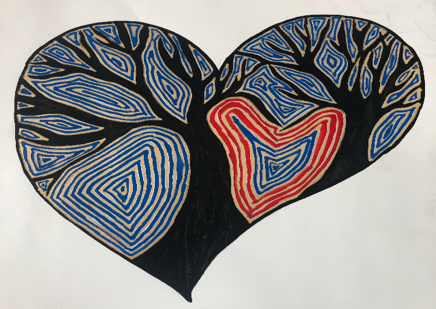
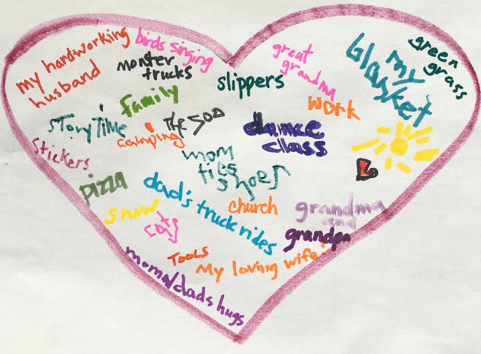
Image: “A Reflective Heart” by Steph Hill
Try it out
Recognize how our power and control comes from how we respond to situations. Make a daily decision to focus on gratefulness.
Model gratefulness. When our loved ones and co-workers constantly hear us saying, “thank you” and “I’m grateful for…”, we are leading by example.
Be specific when acknowledging thankfulness. Instead of asking, “What am I thankful for?”, ask
“What is my favorite cozy place?”
”What makes me laugh?”
“Who was I able to help today?”
”Who has shown me love?”
Personalize your gratefulness by journaling, designing art, writing thank you notes, and sharing with those close to you.
Choose to spend as much time as possible with the people who share your attitude of gratitude. Surrounding ourselves with positive people makes for an unstoppable force of inspiration.
Keep a growth mindset. If we are patient with our growth and make a habit of thinking and verbalizing, “I am working on it” rather than, “I can’t”, our outlook will see endless possibilities and promote thankfulness.
Last, but not least, take care of your heart!According to The American Heart Association, gratitude can help your health. In his book, The Little Book of Gratitude, Robert A. Emmons, Ph.D.,said, “Gratitude is good medicine”. Emmons goes on to share how clinicaltrials indicatethe practice of gratitude can have a dramatic effect in a person’s life and can lower blood pressure and strengthen immune function.
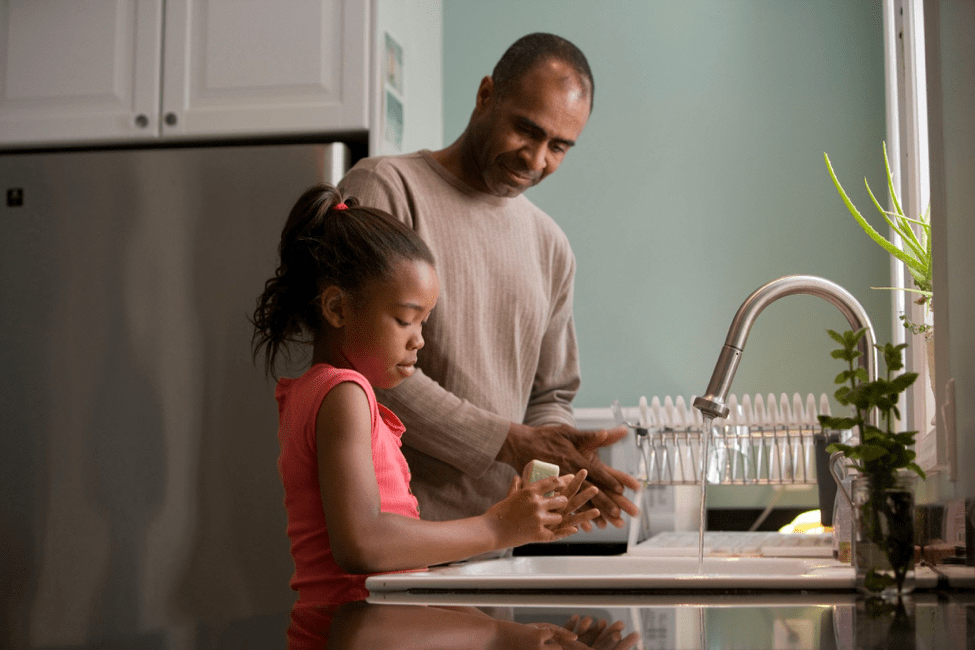
Image: Family Activity, “Attitude of Gratitude”
Talk to Grandma
People who have been around a while seem to understand gratefulness. I’ve asked my 99-year-old grandmother about the secret of life and she always tells me something for which she is thankful. If we could all follow this example, we likely will unlock the fullness of life and get the gift of inner peace. A grateful heart puts us in a state of appreciating what we have, embracing others, and gives us an alternative and clarity about what it is front of us. Let’s change our world and choose a grateful heart by responding to each situation with, “I am grateful for…”.









 Heart and Solutions, LLC